Create an entryway drop zone in an apartment with no hallway
· Editorial team newyorknewsdaily24.com
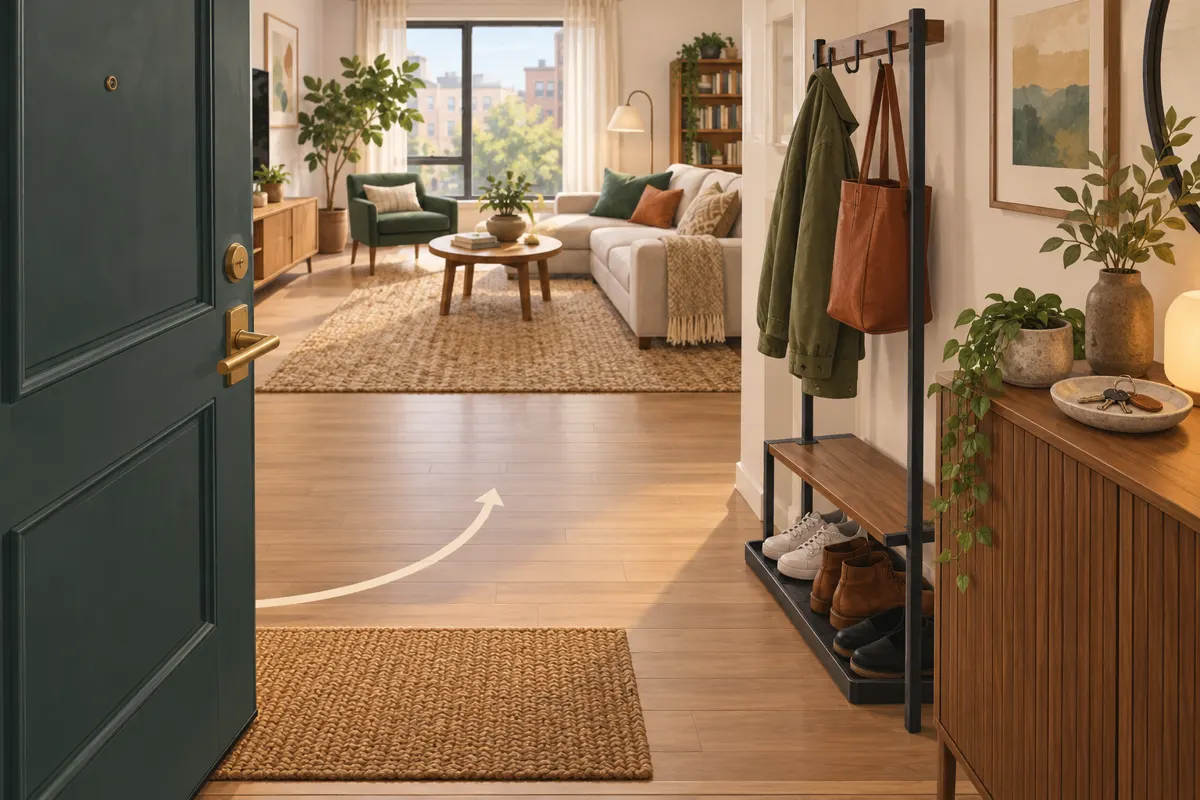
Create an entryway without a hallway by assigning three compact spots near the front door: a tray for keys, a contained space for shoes and a place for your everyday bag. Keep them beside the walking route, with enough room for the door to open fully. The proposed plan below uses movable storage and existing furniture to make a practical drop zone without drilling.
Choose the spot before choosing storage
Start with how you actually enter the apartment. Open the door, step inside and notice where you naturally put down your bag. Look for a nearby corner, a short stretch of wall or the end of an existing cabinet. You do not need to furnish the whole area around the door; one accessible spot can handle the essentials.
Measure the available floor space and the depth of any furniture you are considering. Include handles, baskets and hanging bags, which can extend beyond the furniture itself. Before buying anything, use an empty box to represent its footprint and walk past it carrying your usual bag.
- The front door opens fully without hitting storage or shoes.
- You can enter, turn and continue into the room without stepping around objects.
- Keys and your bag are reachable from inside the apartment.
- Drawers and baskets can open without blocking the route.
- Nearby switches, outlets and heaters remain accessible.
Give shoes, bags and keys separate homes
Store the things you use most often at the entrance and keep the rest elsewhere. A drop zone becomes crowded quickly if it holds every coat, spare tote and pair of shoes. Start with your current everyday items, then add storage only when there is a clear need.
- Keys and small essentials: place one shallow tray on an existing cabinet or small table. Give your wallet and sunglasses a defined place within it.
- Shoes: use a low rack, tray or open basket beside the wall. Keep only the pairs currently in regular use here.
- Bag: choose an open bin or a suitable hook on a stable freestanding rack. Make putting it away a single action.
- Coat: reserve space for the jacket you wear most often; return extra outerwear to a closet.
- Mail: add one small upright holder only if paperwork regularly lands by the door.
Use a compact setup that needs no drilling
For a door beside an existing living room cabinet, the proposed setup is simply a key tray on top and a shoe container alongside it. Put the bag in an open bin beneath the cabinet if there is room. This lets one piece of furniture serve both the living room and the entrance.
For an empty corner, consider a compact freestanding rack with shoe storage below. Check its footprint with a coat and bag hanging from it, not just when it is empty. If the corner cannot accommodate a rack, use a low shoe tray and keep coats in the nearest closet.
Check assembly instructions before choosing furniture: some pieces require wall anchoring. For a no-drill setup, select storage that can be used safely as instructed without it. If you choose removable adhesive hooks for light accessories, check the permitted surface and load; do not assume removal will leave the finish untouched.
Make the drop zone fit the living room
A small mat can mark the arrival area without adding a divider. Choose one that lies flat and clears the opening door. Repeat a color or material already used in the living room so the storage feels connected to the space.
Keep decoration secondary to usable space. A tray and matching baskets may provide enough visual order. Add a small lamp only if there is a suitable outlet and its cord can stay out of the walkway. Leave the landing surface mostly free so it remains easy to use with full hands.
Do a five-minute evening reset
Use this proposed reset before settling in for the evening. Adjust the timing to your household; the aim is to leave the entrance ready for tomorrow.
- First minute: return keys, wallet and sunglasses to the tray.
- Second minute: put everyday shoes in their assigned space and move extra pairs elsewhere.
- Third minute: return your bag and coat to their spots; remove anything that belongs in another room.
- Fourth minute: sort incoming mail, recycling unwanted pieces and moving papers needing attention to your usual paperwork spot.
- Final minute: clear the walking route and check that the door opens freely.