How to keep washed salad greens crisp in the refrigerator
· Editorial team newyorknewsdaily24.com
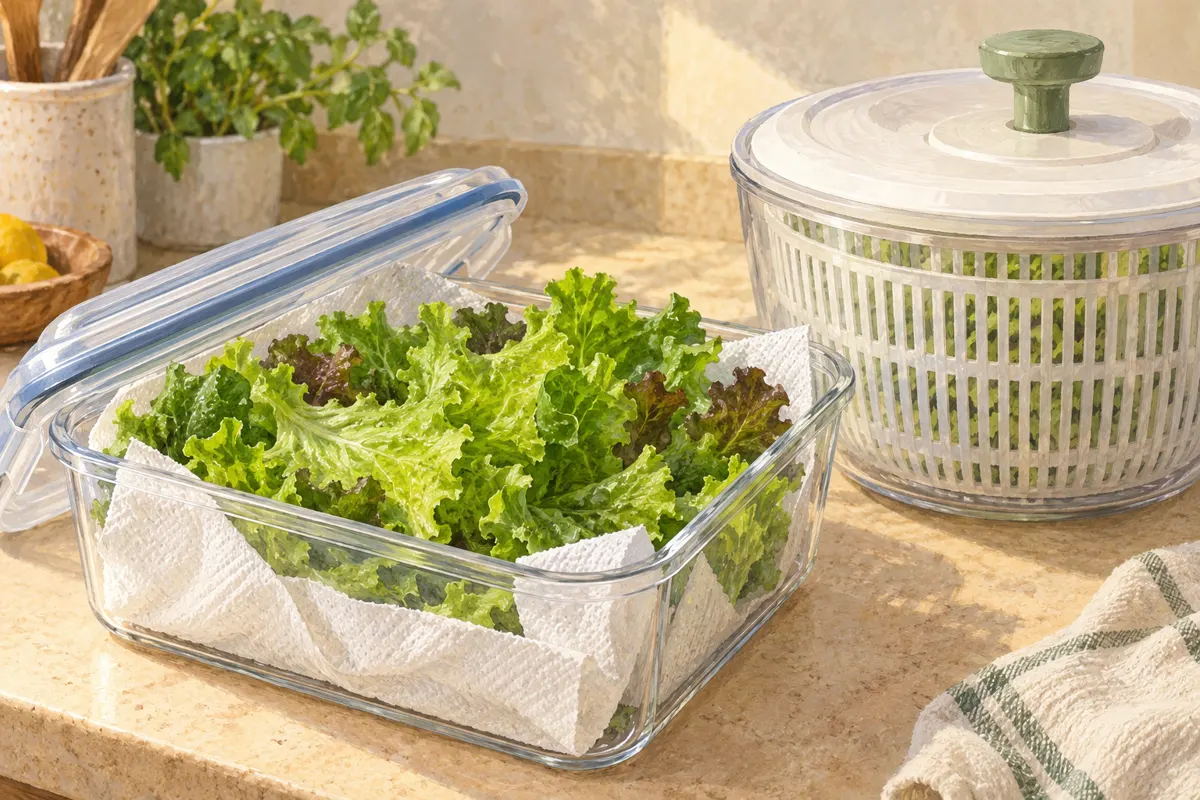
To keep washed salad greens crisp, dry the leaves thoroughly, place them loosely in a clean container lined with paper towels, add another towel on top and close the lid. Refrigerate promptly, then replace the towels when they become damp. The goal is to remove water from the surface while protecting the leaves from drying out or getting crushed.
Dry the leaves before you pack them
Drying is the most useful place to spend a little extra effort. Water left on the leaves can collect at the bottom of a container or leave tender greens sitting against a wet lining. Paper towels help manage leftover moisture, but they should not have to absorb all the water from freshly washed lettuce.
- Lift the washed greens out of the rinse water gently and let the obvious excess drain away.
- Fill a salad spinner no more than halfway so the leaves have room to move without being compressed.
- Spin in small batches, emptying the collected water between batches.
- Check for droplets caught in folded leaves. If necessary, spread the greens on a clean absorbent towel and gently blot the remaining water.
- Drain and dry the storage container before adding the greens.
Without a spinner, a practical alternative is to spread the drained leaves in a loose layer on a clean kitchen towel and blot gently with another. Work in batches rather than piling everything into a wet heap. Avoid squeezing or wringing the leaves: tender salad mixes bruise easily.
Choose a container with room for the greens
A rigid food-storage container with a lid is a useful default. Its sides protect the leaves from neighboring food, and its shape makes it easier to pack them loosely. Choose one large enough that the lid closes without pressing down on the greens. Divide a large batch between containers if needed.
The Kitchn compared three storage methods and found that a paper-towel-lined container performed best in its trial. That supports the method as a practical choice, but the trial's results do not establish a guaranteed storage life for every lettuce or salad mix.
A bag can also work when a container is unavailable. Wrap the dried greens loosely in paper towels, place them in the bag and close it. Give the bag a protected spot in the refrigerator so heavier items cannot flatten it. The main drawback is that flexible packaging offers less protection against crushing.
Use an absorbent lining without packing tightly
Line the bottom of the dry container with a paper towel, add the greens gently and lay another towel over the top before closing the lid. These layers catch excess moisture around the leaves. Do not push the lettuce down to fit more inside; a roomy container is more useful than a tightly filled one.
- Start with dry towels rather than adding water to the lining.
- Keep the leaves loose enough to lift out easily.
- Use a clean, absorbent cloth on the top and bottom if you prefer a reusable lining.
- Close the lid and put the greens in the refrigerator promptly.
The balance matters: the greens need some humidity, while excess surface water encourages deterioration. A covered container and an absorbent lining address those needs together. Leaving washed leaves exposed is not a substitute for drying them properly before storage.
Check the moisture whenever you make a salad
Each time you open the container, check the lining and gently loosen any leaves that have settled together. Replace a towel that feels wet or soggy. If water has collected in the bottom, transfer the greens briefly, wipe the container dry and repack with fresh absorbent material.
Look over the greens as well. Discard slimy or rotten leaves, and do not treat rinsing as a way to restore spoiled lettuce. Keeping the container dry and removing deteriorating leaves are maintenance steps; they cannot reverse spoilage.
Let the condition of the leaves guide you
There is no single number of days that this method guarantees. Tender greens can bruise readily, and their condition when packed affects the result. Use the storage routine to preserve texture, then check the leaves as you use them instead of relying on an ambitious shelf-life claim.
If a batch becomes soggy quickly, review three things first: whether the leaves were thoroughly dried, whether the container was overcrowded and whether the lining stayed wet. Correcting those details is the most direct way to improve the next batch.